Best Mathematics Optional Books for UPSC 2026: 25 Years PYQs with Solutions & Revision Notes by Upendra Singh

Looking for the Best Mathematics Optional Books for UPSC?

If you are preparing for UPSC Civil Services Examination (CSE) or Indian Forest Service (IFoS) with Mathematics Optional, one of the most common questions you might have is:

Which are the best Mathematics Optional books for UPSC?

The answer is simple.

A good Mathematics Optional book should help you:

✔ Understand concepts quickly
✔ Revise effectively before Mains
✔ Practice Previous Year Questions (PYQs)
✔ Improve answer-writing skills
✔ Save time during preparation

To address these exact requirements, Mindset Makers has developed the Mathematics Optional Revision Package 2026–27, a complete set of revision books and 25 years of UPSC Mathematics Optional Previous Year Questions with detailed solutions.

Quick Answer: Which Is the Best Book for Mathematics Optional UPSC?

For serious UPSC aspirants, an ideal Mathematics Optional resource should include:

RequirementImportance
Complete Syllabus CoverageHigh
Topic-Wise PYQsHigh
Detailed SolutionsHigh
Revision NotesHigh
Exam-Oriented ApproachHigh
Exam Approach Table

The Mindset Makers Mathematics Optional Revision Package combines all these features in a single package.

Why Choosing the Right Mathematics Optional Books Matters

Many aspirants purchase multiple books but struggle during revision.

The real challenge is not completing the syllabus.

The real challenge is:

Revising the entire Mathematics Optional syllabus multiple times before UPSC Mains.

This is where most candidates lose marks.

A focused revision resource helps aspirants:

  • Retain formulas
  • Recall concepts faster
  • Solve questions accurately
  • Avoid information overload

Mathematics Optional Revision Package 2026–27: Complete Overview

The package contains six carefully designed books for UPSC Mathematics Optional.
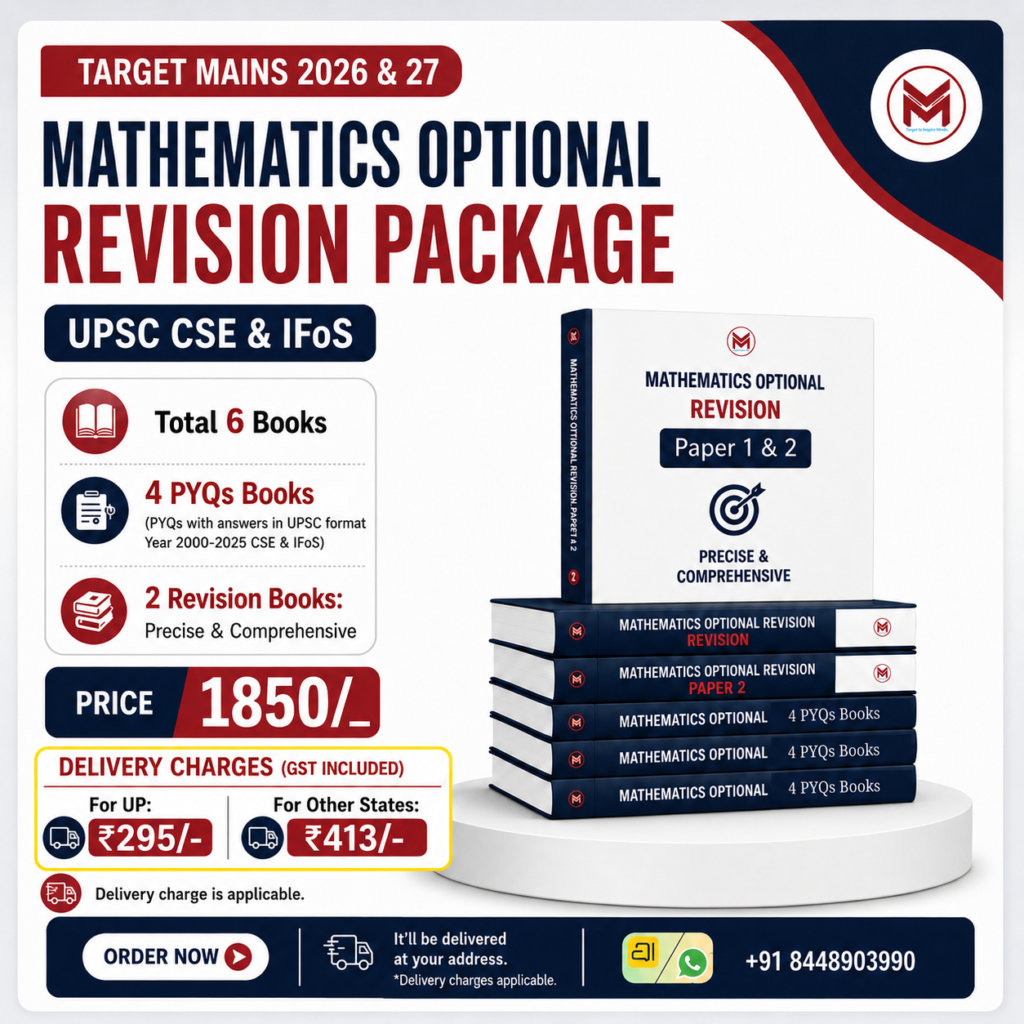
Best Mathematics Optional Books
UPSC Mathematics Optional Books

Package Contents

Book TypeQuantity
Mathematics Optional Revision Paper 11
Mathematics Optional Revision Paper 21
Mathematics Optional PYQ Books4
Total Books6
What you get in this package?

What’s Inside the Mathematics Optional Revision Books?

Mathematics Optional Revision Paper 1

Covers the complete Paper 1 syllabus:

Topics Included

  • Linear Algebra
  • Calculus
  • Analytical Geometry
  • Differential Equations
  • Dynamics and Statics
  • Vector Analysis

Benefits

  • Quick revision before Mains
  • Formula-focused preparation
  • Important concepts at one place
  • UPSC-oriented content

Mathematics Optional Revision Paper 2

Covers the complete Paper 2 syllabus:

Topics Included

  • Modern Algebra
  • Real Analysis
  • Complex Analysis
  • Numerical Analysis
  • Partial Differential Equations
  • Mechanics and Fluid Dynamics

Benefits

  • Structured revision
  • Better theorem retention
  • Faster concept recall
  • Exam-focused preparation

25 Years UPSC Mathematics Optional PYQs with Solutions (2000–2025)

One of the strongest features of this package is the inclusion of 25 Years Previous Year Questions with Detailed Solutions.

Many toppers consider PYQs the most important resource for UPSC preparation.

Why Are Mathematics Optional PYQs Important?

Previous Year Questions help aspirants understand:

UPSC Question Pattern

You learn:

  • Frequently asked topics
  • Weightage distribution
  • Difficulty level

Repeated Concepts

UPSC often tests the same concepts through different question formats.

Practicing PYQs helps identify:

  • High-frequency topics
  • Core concepts
  • Scoring areas

Better Time Management

Regular PYQ practice improves:

  • Speed
  • Accuracy
  • Confidence

Best Mathematics Optional PYQ Book for UPSC

When searching for:

  • Best Mathematics Optional PYQ Book
  • UPSC Maths Optional PYQ Solutions
  • Mathematics Optional Previous Year Questions PDF

Students should look for:

✔ Topic-wise arrangement
✔ Detailed solutions
✔ UPSC answer format
✔ Complete coverage

The Mindset Makers PYQ Series covers UPSC Mathematics Optional questions from 2000 to 2025 with comprehensive solutions.

How to Prepare Mathematics Optional for UPSC Mains?

This is another frequently searched question.

Step 1: Complete the Syllabus

Understand all topics thoroughly.

Step 2: Revise Using Structured Notes

Use concise revision books instead of lengthy textbooks.


Step 3: Solve PYQs

Practice previous year questions repeatedly.


Step 4: Write Full-Length Answers

Develop UPSC-style presentation.


Step 5: Multiple Revisions

Most successful candidates revise the syllabus at least 4–5 times.

Who Should Buy Mathematics Optional Revision Books?

These books are recommended for:

Beginners

Starting Mathematics Optional preparation.

UPSC Mains Candidates

Targeting CSE or IFoS 2026–27.

Working Professionals

Need efficient revision resources.

Repeat Candidates

Looking to improve Mathematics Optional scores.


Frequently Asked Questions (FAQ)

Which is the best Mathematics Optional book for UPSC?

A good Mathematics Optional book should provide revision notes, PYQs, and detailed solutions. The Mathematics Optional Revision Package by Mindset Makers is designed specifically for UPSC CSE and IFoS aspirants.


Are PYQs enough for Mathematics Optional?

PYQs are extremely important but should be combined with proper revision and conceptual understanding.


How many years of PYQs should be solved for UPSC Mathematics Optional?

Ideally, candidates should solve at least 20–25 years of Mathematics Optional Previous Year Questions.


Which topics are most important in Mathematics Optional?

Important areas include:

  • Linear Algebra
  • Calculus
  • Differential Equations
  • Real Analysis
  • Modern Algebra
  • Complex Analysis

Is Mathematics Optional scoring in UPSC?

Yes. Mathematics Optional remains one of the most scoring optional subjects when prepared strategically and revised consistently.


Why Thousands of Aspirants Trust Upendra Singh Sir

With more than 15 years of experience mentoring Mathematics Optional aspirants, Upendra Singh Sir has guided students through:

  • UPSC CSE
  • IFoS Examination
  • Mathematics Optional Strategy
  • Mains Answer Writing
  • PYQ Analysis

The Revision Package is built upon years of classroom teaching, mentorship, and understanding of UPSC trends.


Final Verdict: Is This the Best Mathematics Optional Revision Package?

If you are searching for:

  • Best Mathematics Optional Books
  • Mathematics Optional Notes
  • Mathematics Optional PYQ Book
  • UPSC Mathematics Optional Study Material
  • Mathematics Optional Revision Notes
  • Mathematics Optional Previous Year Questions with Solutions

Then the Mathematics Optional Revision Package 2026–27 by Mindset Makers offers a complete solution in a single package.

It combines:

✅ Paper 1 Revision Book
✅ Paper 2 Revision Book
✅ 25 Years PYQs (2000–2025)
✅ Detailed Solutions
✅ Exam-Oriented Approach
✅ UPSC CSE & IFoS Focus


Mathematics Optional Books for UPSC – Key Takeaway

The candidates who score well in Mathematics Optional are not necessarily those who study the maximum number of books.

They are the ones who:

  • Revise consistently
  • Practice PYQs extensively
  • Follow a structured approach
  • Focus on exam-oriented preparation

Revise. Practice. Perform. Succeed.
How to Download JEE Main 2026 Answer Key (Session 2 PDF, Response Sheet, Release Date)

If you’re searching for:
👉 download JEE Main 2026 answer key
👉 JEE Mains answer key 2026 PDF download
👉 NTA JEE answer key 2026 session 2 date

You’re in the right place.

This guide covers everything in one place — download process, release date, response sheet, provisional vs final key, and how to use it smartly. You can Download UPSC Study Materials Here.

JEE Main 2026 Answer Key Release Date

The National Testing Agency (NTA) has officially released the JEE Main 2026 Session 2 Provisional Answer Key on 11 April 2026.

📅 Latest Update:

🟡 Provisional Answer Key → ✅ Released on 11 April 2026
🟢 Final Answer Key → ⏳ Expected after challenge window closes (likely mid-April 2026)

How to Download JEE Main 2026 Answer Key (Step-by-Step)

Hi guys as you know that in the internet worlds, doing lot of hard work then you get litle bit result but yes, i’m make sure that if you follow these given step then you can get easily your result and not to do more hardwork so let come follow:

Step 1: Visit Official Website

Go to the official JEE Main website:
👉 jeemain.nta.nic.in

Step 2: Find the Correct Link

On the homepage, look for this link:
👉 JEE(Main) 2026 Session 2 Answer Key & Response Sheet

(Don’t click on random links — always choose the official one)

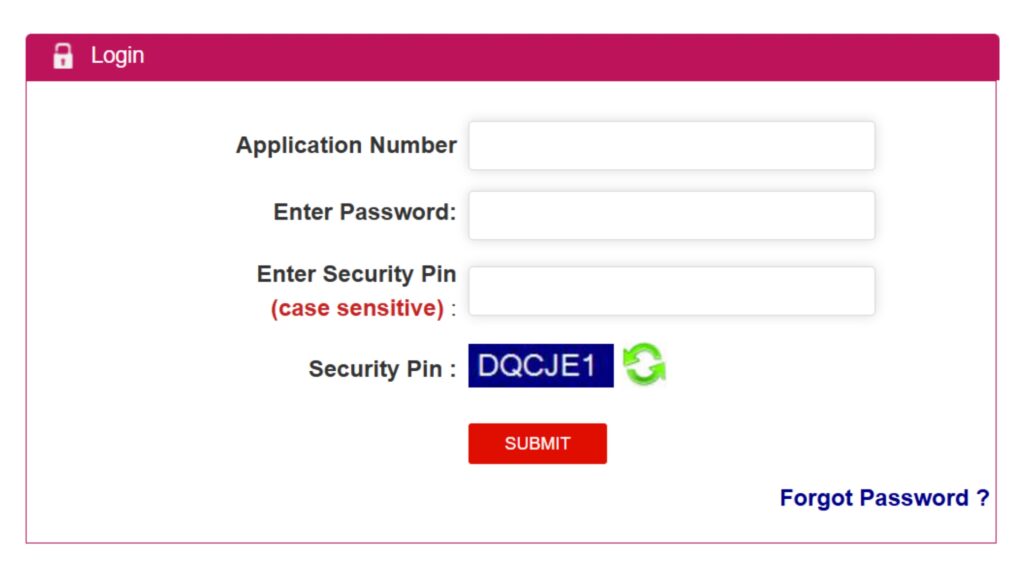
Step 3: Login to Your Account

Enter your details carefully:

JEE Main 2026 Session 2 Answer Key OUT: Check PDF, Response Sheet & Direct Link

Application Number
Password / Date of Birth

Then click on Submit/Login

Step 4: Open Your Answer Key & Response Sheet

After login, you will see:
📄 Answer Key (All Questions & Correct Answers)
📊 Your Response Sheet (Your Attempted Answers)

Step 5: Download the Files
Click on Download Answer Key PDF
Click on Download Response Sheet
Save both files on your device (mobile/laptop)

Here are offical PDF for JEE Main 2026 Answer Sheet

🔍 FAQs
Q1. Let’ know How to download JEE Mains 2026 answer key PDF?

👉 Visit NTA website → Login → Download answer key & response sheet

Q2. When will JEE Main 2026 answer key release?

👉 Within 3–5 days after exam (Session 2: April 2026)

Q3. What is provisional answer key?

👉 Initial answer key that can be challenged

Q4. How to download response sheet JEE 2026?

👉 Login to NTA portal and download along with answer key

Q5. Is final answer key different?

👉 Yes, it is updated after reviewing objections

UPSC Notification 2026 Out: Check Vacancy, Exam Dates, Eligibility & Full Details

The Union Public Service Commission (UPSC) has officially released the much-awaited UPSC Notification 2026, bringing clarity for lakhs of aspirants preparing for the Civil Services Examination (CSE) and Indian Forest Service (IFoS).

As per the official update, the notification was released on 4th February 2026, announcing 933 vacancies across prestigious services like IAS, IPS, and IFoS. If you’re targeting UPSC 2026, this is your starting point—and how you act now will define your result.

UPSC 2026 Exam Dates – Don’t Miss These

he official schedule gives you a clear roadmap:

  • Notification Release: 4 February 2026
  • Application Window: February 2026
  • Correction Window: 28 Feb – 3 March 2026
  • Prelims Exam: 24 May 2026
  • Mains Exam: From 21 August 2026

👉 This means you have roughly 3–4 months for Prelims, making strategy and revision more important than ever.

UPSC Vacancy 2026

UPSC has announced 933 vacancies, which keeps the competition intense but consistent with previous trends. These vacancies are distributed among:

  • Indian Administrative Service (IAS)
  • Indian Police Service (IPS)
  • Indian Foreign Service (IFS)
  • Other Group A & B Services

💡 Aspirant Insight (Mindset Makers): Instead of focusing on vacancy numbers, focus on improving your rank potential—because selection depends on performance, not seats.

UPSC Eligibility Criteria 2026

Before applying, ensure you meet the basic criteria:

✔️ Age Limit
Minimum: 21 years
Maximum: 32 years (relaxation for reserved categories)
✔️ Educational Qualification
A graduate from a recognized university
✔️ Attempts

CategoryAttempts
General6
OBC9
SC/STUnlimited

UPSC Exam Pattern (Quick Understanding)

The UPSC exam is conducted in three stages:

🔹 Prelims (Screening Stage)
GS Paper I (Merit-based)
CSAT (Qualifying)
🔹 Mains (Core Stage)
9 descriptive papers including Essay, GS, and Optional
🔹 Interview
Personality Test (275 marks)

👉 Mindset Makers Tip: UPSC is not just a knowledge test—it evaluates your thinking ability, clarity, and consistency.

What Should You Study for UPSC 2026?

A structured preparation approach is essential:

🔸 Core Subjects
Polity (Laxmikanth)
Modern History (Spectrum)
Geography (NCERT + Atlas)
Economy (Basics + Current Affairs)
Environment
🔸 Current Affairs
Daily newspaper
Monthly revision

💡 At Mindset Makers, we always emphasize limited resources + maximum revision—this is what toppers follow.

UPSC PYQs – The Game Changer

Previous Year Questions (PYQs) help you understand UPSC’s mindset.

Example:

Q: Which of the following is not a Fundamental Right?
(a) Right to Equality
(b) Right to Freedom
(c) Right to Property
(d) Right against Exploitation

✔️ Answer: Right to Property

👉 PYQs reveal that UPSC focuses on concept clarity, not just facts.

UPSC 2026 Preparation Strategy

If you’re serious about clearing UPSC, follow this:

✔️ Phase 1 (Now – March)
Complete basics (NCERT + standard books)
✔️ Phase 2 (April – May)
Intensive revision
Full-length mock tests
✔️ Phase 3 (After Prelims)
Mains answer writing
Optional subject mastery

💡 Mindset Makers Strategy:
Don’t chase multiple sources. Stick to one plan, revise multiple times, and test yourself regularly.

FAQs

❓ Is UPSC Notification 2026 released?

✔️ Yes, released on 4 February 2026.

❓ What is the UPSC Prelims 2026 date?

✔️ 24 May 2026.

❓ How many vacancies are there in UPSC 2026?

✔️ 933 vacancies.

❓ When will UPSC Mains 2026 start?

✔️ From 21 August 2026.

Final Words for Aspirants

UPSC is not just an exam—it’s a journey of discipline, patience, and self-belief.

At Mindset Makers, we have seen one common trait among successful candidates:
👉 They don’t wait for motivation—they build systems.

If you start today with a clear plan, consistent effort, and the right guidance, UPSC 2026 can be yours.

UPSC Mathematics Optional 2026: The Ultimate Guide to 300+ Marks

Choosing Mathematics as your UPSC optional is a high-stakes, high-reward decision. It is one of the few subjects where scoring 300+ marks is a realistic goal due to its objective nature. However, the vast syllabus requires a disciplined, “engineer-like” precision in your preparation.

If you are searching for:

  • UPSC Maths Optional strategy
  • Real Analysis / Complex Analysis preparation
  • PYQ solutions and topper guidance

Why Choose Mathematics Optional for UPSC?

Mathematics is not just another optional — it is a rank-deciding subject.

Key Advantages:

Choosing Mathematics as your optional is a strategic move that can significantly boost your overall UPSC rank. Unlike descriptive subjects where marks often hit a “ceiling,” Mathematics offers a level of transparency and scoring potential that is unmatched.

High Scoring Potential (The “300+” Factor)

The most compelling reason to choose Maths is its mathematical certainty. In humanities subjects, your marks depend on the examiner’s perspective, your writing style, and the “subjectivity” of your arguments. In Mathematics, if you arrive at the correct answer through logical steps, the examiner is compelled to give you near-full marks. It is one of the few optionals where scores of 320–350 are consistently achievable.

Immunity to “Scaling” and Subjectivity

The UPSC uses a scaling system to normalize marks across different subjects. Since Mathematics is objective, it is less prone to the erratic swings of “liberal” or “strict” marking that often affect subjects like Sociology or Geography. Your performance is in your hands; if you solve 80% of the paper correctly, your score will reflect that without being dampened by an examiner’s personal bias.

Static and Predictable Syllabus

Unlike subjects like Political Science or Economics, the Mathematics syllabus is 100% static.

  • The principles of Linear Algebra or Vector Analysis do not change with current affairs.
  • Once you have mastered a topic and its theorems, you don’t need to constantly update your notes with newspapers or yearbooks.
  • This makes the revision process highly efficient in the final months before the Mains.

Overlap with Logical Reasoning (CSAT)

While the optional syllabus is much more advanced, the “mathematical mindset” you develop makes Paper II (CSAT) in the Prelims a breeze. You will find yourself solving the Quantitative Aptitude and Logical Reasoning sections with significantly higher speed and accuracy than other candidates, saving you precious time and reducing Prelims-day stress.

High Return on Investment (ROI)

The initial learning curve for Mathematics is steep, and it requires more hours of study than other subjects. However, the ROI is higher because:

  • Repetitive Patterns: Approximately 60% of the questions are variations of Previous Year Questions (PYQs).
  • Defined Boundaries: You know exactly what to expect. There are no “surprise” questions from outside the standard textbooks.
  • Logical Satisfaction: For those with a background in Engineering or Science, practicing Maths acts as a “brain break” from the heavy reading required for General Studies (GS).

Precision in Answer Writing

In General Studies, you often have to write long, 250-word essays where the structure can be vague. In Mathematics, the structure is dictated by the logic of the problem. This clarity of thought often spills over into your GS papers, helping you write more structured, concise, and logical answers.

A Quick Reality Check:

While these advantages are significant, they only apply if you have a genuine interest in the subject. Success in Maths comes from the joy of problem-solving; without that, the vast syllabus can feel overwhelming.

Given your background, do you feel more comfortable with the Applied topics (like Fluid Dynamics and Mechanics) or the Abstract side of things (like Modern Algebra and Real Analysis)?

People also search

Is Mathematics Optional a good choice for UPSC 2026-2027?

The Answer: Yes. Mathematics remains one of the highest-scoring optionals. In recent years (2024-2025), toppers have consistently scored 320+ marks. It is ideal for those with a background in Engineering or B.Sc. Maths because the syllabus is 100% static and marks are awarded objectively for correct steps.

Can I clear UPSC Maths Optional without coaching?

The Answer: Absolutely. While coaching provides a structured path, many aspirants clear it using standard Text MindsetMakers (like Upendra Sir for ODE/PDE and X for Algebra) and YouTube. The key is to solve 20 years of PYQs (Previous Year Questions) and join a Test Series for Paper-II, which is often more abstract and harder to self-evaluate.

Is there step-wise marking in UPSC Mathematics?

The Answer: Yes, UPSC follows a strict step-marking policy. Even if your final numerical answer is wrong due to a minor calculation slip, you can still secure 60–70% of the marks if your method, theorems used, and logical flow are correct.

Which calculator is allowed in UPSC Mains for Mathematics?

The Answer: Candidates are allowed to use a non-programmable scientific calculator for both Paper I and Paper II. Popular choices include the Casio fx-82MS or fx-100MS. You should start using your calculator during daily practice to build speed and familiarity.

How much time is required to finish the UPSC Maths syllabus?

The Answer: On average, it takes 6 to 8 months of dedicated study (4-5 hours daily) to cover the syllabus once. However, since Maths requires multiple rounds of practice, it is recommended to start at least 12 months before your Prelims so that you can finish the optional syllabus and one round of revision by January of your attempt year.

UPPCS Syllabus 2026: Latest Exam Pattern for Prelims & Mains (Detailed Guide)

UPPCS Syllabus 2026: The UPPCS Syllabus and Exam Pattern are very important for exam preparation. The latest syllabus helps you understand which subjects and topics will be asked about in the exam.

By knowing the Prelims and Mains exam pattern, you can also understand the marking scheme, question types, and overall exam structure. This makes your preparation more focused, saves time, and improves your chances of scoring better.

UPPSC Syllabus 2026

Applicants who are planning to appear for the UPPSC Exam 2026 should go through the latest syllabus to prepare effectively. A clear understanding of the UPPSC syllabus 2026 helps candidates focus on important subjects and topics.

The UPPSC selection process includes two stages: the Preliminary Exam and the Mains Exam. Knowing the syllabus and exam pattern in advance allows candidates to create a better study plan and stay updated with the latest exam requirements.

UPPSC Eligibility Criteria

UPPSC Syllabus 2026 Overview

The UPPSC examination is a multi-stage process designed to assess the knowledge and capabilities of candidates aspiring for various administrative positions in the state of Uttar Pradesh. Let us look at an overview of different stages that involves UPPSC syllabus.

UPPSC Syllabus 2026
Stages of UPPSC ExamSubjectsTotal Marks and Questions
UPPSC Prelims ExamPaper 1: General Studies 1200 marks with 150 questions
Paper 2: General Studies 2 (CSAT)200 marks with 100 Questions
UP PCS Mains ExamGeneral Hindi150 marks
Essay150 marks
General Studies 1200 marks
General Studies 2200 marks
General Studies 3200 marks
General Studies 4200 marks
General Studies 5200 marks
General Studies 6200 marks
InterviewPersonality Test or Interview100 marks
Paper 1 and 2 Marks Analysis

UPPSC Previous Year Question Paper

UPPSC Syllabus 2026 PDF

Applicants may have a better understanding of what is required for the UPPCS Exam 2026 by downloading the UPPSC Prelims and Mains Syllabus PDF. The updated UPPCS Syllabus PDF may be downloaded by candidates. Candidates can download the pdf to get the whole syllabus for UPPCS.

UPPSC Syllabus PDF

UPPSC Exam Pattern 2026

Candidates for Group A and Group B officers in the state government’s administrative services must pass the PCS Exam, which is administered by UPPSC. The new UPPSC Exam Pattern 2026 is based on the pattern of the UPSC exam. The most recent UPPCS official notification states that there has been a revision to the UPPSC PCS Exam Pattern. The following are significant modifications to the exam pattern:

  • Eight papers will now be required for the UPPCS Mains.
  • Optional subject selection is no longer available.
  • The two optional subject papers have been replaced with two compulsory papers. The general knowledge of Uttar Pradesh will be covered in these papers.

Mindset Makers UPPSC Online Course

UPPSC Prelims Exam Pattern

The UPPSC Prelims Exam Pattern has been mentioned below, which is released by the recruitment authority. The exam pattern is given below, which is the structure of the UPPSC 2026 exam.

UPPSC Prelims Exam Pattern
Name of ExamCombined State/Upper Subordinate Services (General Recruitment/Physically Handicapped—Backlog/Special Recruitment) (Preliminary) Examination
Number of PapersPaper 1: General Studies Paper 2: General Studies II (CSAT)
Maximum MarksBoth papers will have 200 marks each. However, only Paper 1 will be considered for merit ranking. Paper 2 is a qualifying paper on the lines of IAS Prelims (33% qualifying criteria)
Number of QuestionsPaper I: 150 questions Paper II: 100 questions
Type of ExamOffline (pen-paper) OMR sheets
Nature of QuestionsAll questions will be of the objective type (MCQs)
Negative MarkingAs per the new UPPSC exam pattern, there will be 0.33% negative marking for every incorrect answer. For example, if the maximum marks allotted for a question is 2, then answering it incorrectly would incur a penalty of 0.66 marks Filling multiple circles on the OMR sheet for the same question would be treated as an incorrect answer. There is no negative marking for leaving a question blank
UPPSC Prelims Exam Pattern

UPPSC Mains Exam Pattern

The UPPSC Mains Exam Pattern has been mentioned below, which is released by the recruitment authority. The exam pattern is given below, which is the structure of the UPPSC 2026 exam.

UPPSC Mains Exam Pattern
Name of ExamCombined State/Upper Subordinate Services (General Recruitment/Physically Handicapped Backlog/Special Recruitment) Main (Written) Examination
Number of PapersGeneral Hindi Essay, General Studies I General Studies II General Studies III General Studies IV General Studies V General Studies VI
Maximum MarksGeneral Hindi – 150 marks Essay – 150 marks All General Studies Papers and Optional subject papers will be worth 200 marks each. Total – 1500 marks
Type of ExamOffline (Pen-paper)
Nature of QuestionsEssay/descriptive type
Mains Exam Pattern

UPPSC Prelims Syllabus 2026

The UPPSC Prelims Examination is meant to serve as a screening exam only, and the marks obtained in the PCS Preliminary Examination by the candidates who are declared qualified for admission to the Main Examination will not be counted for determining their final order of merit. The syllabus for the UPPSC PCS Prelims is similar to that of the IAS.

UPPSC Prelims Syllabus
PapersTopics
Paper 1: General studiesCurrent events of national and international importance History of India and the Indian National Movement: India and World Geography Indian Politics and Governance Economic and Social Development General Issues on Environmental Ecology, Biodiversity, and Climate General Science
Paper 2: General Studies II (CSAT)Comprehension Interpersonal skills (including communication skills) Analytical Ability and Logical Reasoning Problems Solving and decision-making General Mental Ability Elementary Mathematics (class X level: Algebra, Statistics, Geometry and Arithmetic) General English (Class X level) General Hindi (Class X level)
UPPSC Prelims Syllabus

UPPSC Salary

UPPSC Mains Syllabus 2026

The UPPSC Mains Exam comprises eight papers. The marks secured in the UPPSC Main exam are the deciding factor in the final selection. There are six general studies papers in the main selection process.

UPPSC Syllabus Mains GS Paper 1

  • The history of culture will cover the salient aspects of art forms, literature, and architecture from ancient to modern times.
  • Modern Indian history (from A.D. 1757 to A.D. 1947): significant events, personalities, issues, etc. 
  • The Freedom Struggle—its various stages and important contributors/contributions from different parts of the country.
  • Post-independence consolidation and reorganization within the country (till 1965 A.D.)
  • The history of the world will include events from the 18th century to the middle of the 20th century, such as the French Revolution of 1789, the American Revolution, World Wars, the redrawing of national boundaries, socialism, Nazism, fascism, etc.—their forms and effects on society.
  • Salient features of Indian society and culture.
  • Role of women in society and women’s organizations, population, and associated issues, poverty and developmental issues, and urbanization, their problems, and their remedies.
  • The meaning of liberalization, privatization, and globalization and their effects on the economy, politics, and social structure.
  • Social empowerment, communalism, regionalism, and secularism.
  • Distribution of major natural resources of the world—water, soils, and forests—in South and Southeast Asia with special reference to India. Factors responsible for the location of industries (with special reference to India).
  • Salient features of physical geography include earthquakes, tsunamis, volcanic activity, cyclones, ocean currents, winds, and glaciers.
  • The oceanic resources of India and their potential.
  • The human migration-refugee problem of the world, with a focus on India.
  • Frontiers and boundaries of the Indian subcontinent
  • Population and Settlements: Types and Patterns, Urbanization, Smart Cities, and Smart Villages.

UPPSC Syllabus Mains GS Paper 2

  • Indian Constitution: historical underpinnings, evolution, features, amendments, significant provisions, and basic structure; the role of the Supreme Court in the evolution of basic provisions of the Constitution.
  • Functions and responsibilities of the Union and the States: issues and challenges about the federal structure, devolution of powers and finances up to local levels, and challenges therein.
  • Role of the Finance Commission in center-state financial relations.
  • Separation of powers, dispute redressal mechanisms, and institutions. Emergence and use of alternative dispute redressal mechanisms.
  • Comparison of the Indian constitutional scheme with that of other major democratic countries.
  • Parliament and state legislatures: structure, functioning, conduct of business, powers and privileges, and concerned issues.
  • Structure, organization, and functioning of the executive and the judiciary.

UPPSC Syllabus Mains GS Paper 3

  • Economic planning in India, objectives, and achievements. Role of NITI Aayog in Pursuit of Sustainable Development Goals (SDGs).
  • Issues of poverty, unemployment, social justice, and inclusive growth.
  • Components of government budgets and financial systems.
  • Major crops, different types of irrigation and irrigation systems, storage, transport, and marketing of agricultural produce, and e-technology in aid of farmers.
  • Issues related to direct and indirect farm subsidies and minimum support prices, the Public Distribution System—objectives, functioning, limitations, revamping, issues of buffer stocks and food security, and technology missions in agriculture.
  • Food processing and related industries in India—scope and significance, location, upstream and downstream requirements, and supply chain management.
  • Land reforms in India since independence.
  • Effects of liberalization and globalization on the economy, changes in industrial policy, and their effects on industrial growth.
  • Infrastructure: energy, ports, roads, airports, railways, etc.
  • Science and technology developments and applications in everyday life and national security are India’s science and technology policy.
  • Achievements of Indians in science and technology, indigenization of technology. Development of new technologies, transfer of technology, and dual- and critical-use technologies.
  • Awareness in the fields of information and communication technology (ICT), space technology, computers, energy resources, nanotechnology, microbiology, and biotechnology. Issues relating to intellectual property rights (IPR) and digital rights.
  • Environmental security and ecosystems, conservation of wildlife, biodiversity, environmental pollution and degradation, and environmental impact assessment.
  • Disaster as a non-traditional security and safety challenge, disaster mitigation, and management.
  • Challenges of International Security: Issues of Nuclear Proliferation and the Causes and spread of extremism Communication networks, the role of media and social networking, the basics of cybersecurity, money laundering, and human trafficking.
  • India’s internal security challenges include terrorism, corruption, insurgency, and organized crime.
  • Role, kind, and mandate of security forces and defense organizations in India 
  • Issues in Agriculture, Horticulture, Forestry, and Animal Husbandry.

UPPSC Syllabus Mains GS Paper 4

  • Ethics and Human Interface: Essence, Determinants, and Consequences of Ethics in Human Action; Dimensions of Ethics; Ethics in Private and Public Relationships. Humans learn from the lives and teachings of great leaders, reformers, and administrators about the role of family, society, and educational institutions in inculcating values.
  • Attitude: content, structure, function, its influence, and relation with thought and behavior; moral and political attitudes; social influence; and persuasion.
  • Aptitude and foundational values for civil service include integrity, impartiality, and nonpartisanship; objectivity; dedication to public services; empathy; tolerance; and compassion towards the weaker sections.
  • Emotional Intelligence—concept and dimensions, its utility and application in administration and governance.
  • Contributions of moral thinkers and philosophers from India and around the world.
  • Public Service Values and Ethics in Public Administration: Status and Problems, Ethical Concerns and Dilemmas in Government and Private Institutions, Laws, Rules, Regulations, and Conscience as Sources of Ethical Guidance, Accountability, and Governance.
  • Probity in Governance: the concept of public service, the philosophical basis of governance and probity, information sharing, and transparency in government.
  • Case studies on the above issues.

UPPSC Syllabus Mains GS Paper 5

  • History, Civilization, Culture, and Ancient Cities of UP. 
  • architecture, their significance and maintainability, and the museum, archive, and archaeology of UP. 
  • Contributions to the urban, pre-, and post-freedom struggles of India.
  • Eminent freedom fighters and personalities of UP.
  • Rural, urban, and tribal issues: social structure, festivals, fairs, music, folk dances, literature, languages and languages/dialects, and social customs of UP.
  • Political System of UP: Governance, Governor, Chief Minister, Council of Ministers, State Assembly and State Council, and Center-State Relation.
  • Public Service, Public Service Commission, Auditing, Advocate General, High Court, and its jurisdiction in UP.
  • Special state selection criteria, official language, consolidated fund and Contingency Fund, political parties, and State Election Commission of UP.
  • Local Self-Government: Urban and Panchayati Raj, Public Policy, Related Issues in the U.P. 
  • Good Governance, Eradication of Corruption, Lokayukta, Citizen Charters, E-Governance, Right to Information, and Redressal Policy.
  • Land reforms and their impact in UP.
  • Issues Related to Security in UP.
  • Law and order and civil defense in UP.
  • Medical and Health Issues in UP 
  • State Education System of UP.
  • Contribution to the development of India.
  • Current Affairs at UP.
  • Implementation of the Jal Shakti Mission and another central welfare scheme in UP. 
  • NGOs in UP: Issues, Contribution, and Impact.
  • Tourism in UP: Issues and Prospects.
  • Emphasis on innovation in various fields in UP: issues and its impact on employment and the socio-economic development of society.

UPPSC Syllabus Mains GS Paper 6 

  • Overview of the Economy of UP: Main Features of the Economy and State Budgets, Infrastructure, and the Importance of Physical Resources.
  • Trade, commerce, and industries in UP.
  • UP Government Schemes, Projects, and Planned Development for the Welfare of People, Human Resources, and Skill Development.
  • Investment in UP: Issues and Impact 5- Public Finance and Fiscal Policy, Tax and Economic Reforms, and the One District, One Product Policy of the UP Government.
  • Planning and management of renewable and non-renewable energy resources in UP.
  • Demography, Population, and Censuses of the UP.
  • Commercialization of agriculture and production of crops in UP.
  • UP New Forest Policy. 
  • Agro and Social Forestry in the U.P.
  • Agricultural Diversity, Problems of Agriculture, and Their Solutions in UP.
  • Developmental indicators of U-pin in various fields.
  • Geography of UP: Geographical Location, Relief, and Structure; Climate; Irrigation; Minerals; Drainage System; and Vegetation.
  • National Parks and Wildlife Sanctuaries in UP.
  • Transport Network in UP.
  • Power Resources, Infrastructure, and Industrial Development of UP.
  • Pollution and Environmental Issues in the U.P.: Pollution Control Board and Its Functions.
  • Natural Resources of UP—Soil, Water, Air, Forests, Grasslands, and Wetlands.
  • Climate Change and Weather Forecasting Issues in UP.
  • Habitat and Ecosystem, Structure and Function, Adjustment, and Flora and Fauna Concerning UP.
  • Science and Technology: Its Issues, Advancements, and Efforts in the U.P. 
  • Aquaculture, Viticulture, Sericulture, Floriculture, Horticulture, and Arboriculture in UP and Their Impact on the Development of UP. 
  • The evolution of public-private partnerships (PPPs) for the development of UP.

UPPSC Interview

The UPPSC interview is the last exam phase. Those who pass the main exam will receive a call to come to the personnel interview. There will be a 100-mark interview. Candidates are interviewed by a board designated by the UPPSC. Applicants must bring all original documentation for their professional experience and academic records to the office on the day specified.

Other Related Links of UPPSC Exam 2026
UPPSC NotificationUPPSC Salary
UPPSC ResultUPPSC Syllabus
UPPSC Answer KeyUPPSC Eligibility Criteria
UPPSC Admit CardUPPSC Apply Online
UPPSC Previous Year Question PaperUPPSC Selection Process
UPPSC Cut-Off
UPPSC Exam 2026

UPPSC Syllabus 2026 FAQs

1. What kinds of questions are asked in the UPPSC preliminary exam?

Answer: The PCS preliminary exam consists of multiple-choice (MCQ)/objective-type questions. Two papers, General Studies I and General Studies II, comprising objective and multiple-choice questions (MCQs), constitute the preliminary exam. There are 200 marks on each paper.

2. How many subjects are in the UPPSC syllabus for the PCS Exam (Mains)?

3. How can I prepare for UPPSC 2026?

4. Who is eligible for the UPPSC exam?

5. What is the biggest change made to the UPPSC syllabus for 2026?

CTET Answer Key 2026 (Paper 1 & 2) – Download PDF & Check Your Score

CTET Exam Answer Key 2026 – Complete Detailed Guide (Download PDF, Objection Process, Score Calculation & Latest Updates)

What is CTET Exam Answer Key?

If you have appeared in the CTET exam, the first thing you wait for after the exam is the CTET Exam Answer Key.

The CTET Answer Key is an official document released by CBSE that contains the correct answers to all the questions asked in Paper 1 and Paper 2.

It helps you:
✔ Check your performance before result
✔ Calculate your expected marks
✔ Identify mistakes
✔ Raise objections if any answer seems incorrect
✔ Reduce result anxiety

👉 CTET Answer Key = Your Performance Preview Before Result

CTET Answer Key Release Timeline – Step-by-Step Process Explained

After the CTET examination is successfully conducted across the country, the answer key release process begins. Many students feel anxious during this phase because they want to know their expected marks as soon as possible.

1️⃣ CTET Exam Conducted

The process starts once the CTET exam (Paper 1 and Paper 2) is completed.

  • The exam is conducted in online mode (CBT).
  • Candidates receive their response sheet record.
  • After the exam, the evaluation process begins internally.

At this stage, students should:

✔ Keep their admit card safe
✔ Remember their paper code
✔ Stay updated through the official website

2️⃣ Within 7–10 Days – Provisional Answer Key Released

Generally, within 7 to 10 days after the exam, the provisional answer key is released on the official CTET website.

This is the first official answer key and includes:

  • All question paper sets
  • Correct answers as per board evaluation
  • Candidate response sheet access

This is very important because:

👉 Students can calculate their expected score before the result.
👉 Any errors can be identified at this stage.

This period is crucial for serious aspirants.

3️⃣ 3–5 Days Objection Window

Once the provisional answer key is released, the board opens an objection window for around 3 to 5 days.

During this period:

  • Candidates can challenge any incorrect answer.
  • Objections must be submitted online.
  • A fee (usually ₹1000 per question) is charged.
  • Supporting proof (book reference or valid source) must be attached.

Important:

If your objection is found correct → The fee is refunded.
If incorrect → The fee is not refunded.

CTET Answer Key 2026 – Video Explanation

4️⃣ Final Answer Key Released

After reviewing all objections submitted by candidates:

  • Subject experts re-evaluate challenged questions.
  • Necessary corrections are made.
  • A final answer key is released.

This final answer key is:

✔ Official
✔ Error-checked
✔ Used for result preparation

Why Understanding This Timeline Is Important for Students

Many students panic after the exam. But understanding this structured timeline helps you:

  • Stay mentally prepared
  • Avoid fake news or unofficial answer keys
  • Plan your next steps
  • Raise objections within deadline

Types of CTET Answer Keys (Very Important to Understand)

CTET releases two answer keys, and every student should understand the difference.

1️⃣ Provisional Answer Key (First Answer Key)

This is the first answer key released after the exam.

What you can do with it:

✔ Check your answers
✔ Calculate your expected marks
✔ Find mistakes (if any)
✔ Raise objections if you feel any answer is wrong

Important thing to remember:

👉 This answer key is not final.
👉 Some answers may be corrected later.

2️⃣ Final Answer Key (Last & Official Answer Key)

After checking all objections submitted by students, CTET releases the Final Answer Key.

Central Board of School Education (CBSE) will be release Answer Key for the Central Teacher Eligibility Test (CTET) February Examination 2026 on the official website. The exam was conducted in 07-08 February 2026, and the last date to submit the application form was 18 December 2025. Candidates Can Check their Answer Key Soon using their Enrollment Number, Registration Number, or Date of Birth by logging into the portal. CTET Answer Key is expected to release soon here. The direct link is provided below.

What happens here:

✔ Valid corrections are made
✔ Wrong answers (if any) are corrected
✔ Final answers are fixed

Most important:

👉 Once the final answer key is released, no more objections are allowed.
👉 The CTET result is prepared based only on this final answer key.

How to Download CTET Answer Key 2026: Step-by-Step Guide

Wondering how to download CTET answer key 2026 for the Feb exam? Follow these simple steps on the official site:

Visit ctet.nic.in: Head to the official CTET website homepage.
Click the Link: Find and tap Login: CTET Feb 2026 Answer Key.
Log In: Enter your registration ID and password.
View & Download: Your CTET answer key 2026 PDF and response sheet will appear—download them instantly for score checking.

How to Calculate CTET Marks Using Answer Key 2026

Got your CTET answer key 2026 downloaded? Now, learn how to calculate CTET marks accurately to predict your score before results. The CTET marking scheme is straightforward: +1 for correct answers, 0 for unattempted, and -0.25 for wrong ones (Paper 1 & 2).

Step-by-Step CTET Score Calculation
Match Responses: Open your response sheet and the official CTET answer key PDF. Compare each question.

Tally Correct Answers: Count green matches (+1 mark each).
Count Wrong Answers: Note red mismatches (-0.25 marks each).
Skip Unattempted: These score 0—no penalty.

Apply Formula:
Total Score = (Correct Answers × 1) – (Wrong Answers × 0.25)
Example: 120 correct, 20 wrong = (120 × 1) – (20 × 0.25) = 120 – 5 = 115 marks.

Quick Tips for Accurate CTET Marks Calculation

  • Use a CTET score calculator tool online for speed.
  • Double-check negatives—they can drop your score fast.
  • Qualifying marks: 60% (90/150) for General, 55% (82/150) for Reserved.

This method helps you gauge if you’ve cleared the CTET cutoff 2026!

What Are Minimum Qualifying Marks in CTET?

To qualify CTET:

CategoryMinimum %Marks Required
General60%90 out of 150
SC/ST/OBC/PwD55%82 out of 150
What Are Minimum Qualifying Marks in CTET?

If you score:

  • 90+ (General) → Qualified
  • 82+ (Reserved) → Qualified

Remember: CTET is qualifying in nature, not a ranking exam.

Smart Strategy: How to Check Answer Key Properly

Most students make this mistake:

Don’t do that: Follow this strategy:

✔ Check paper code carefully
✔ Sit calmly
✔ Match answers one by one
✔ Count correct answers
✔ Note doubtful questions separately
✔ Research doubtful answers before raising objection

When will CTET answer key 2026 be released?
Usually within 7–10 days after the exam.

How to download CTET answer key PDF?
Visit ctet.nic.in → Click Answer Key → Login → Download PDF.

Is there negative marking in CTET?
No. CTET does not have negative marking.

How many marks required to qualify CTET?
90 marks for General category and 82 for reserved categories.

Can I challenge CTET answer key?
Yes, during objection window by paying ₹1000 per question.

Why CTET Answer Key Is Important for Serious Aspirants?

Many students ignore answer key seriously.
But toppers use it to:

  • Analyse weak topics
  • Identify conceptual gaps
  • Plan next attempt
  • Reduce anxiety
  • Stay mentally prepared

CTET is a competitive environment.
Self-analysis is your biggest advantage.

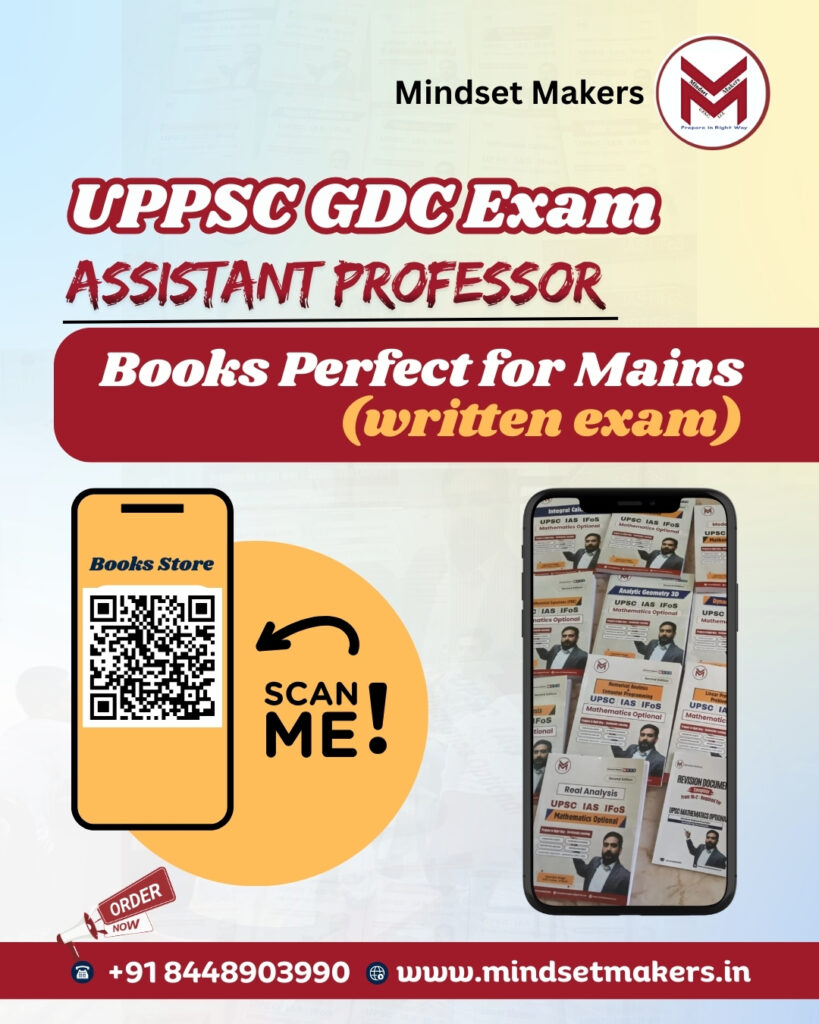
UPPSC GDC Assistant Professor Books for Mains (Written Exam) – Complete & Trusted Guide

Preparing for the UPPSC GDC Assistant Professor Mains (Written Exam) requires concept clarity, syllabus coverage, and exam-oriented practice. While many books (Designed by Upendra Singh Sir) focus only on solved papers, successful candidates rely on structured theory + PYQ understanding + answer-writing readiness.

This article explains:

What books are essential for UPPSC GDC Mains
How Mindset Makers books help beyond PYQs
A safe, confidence-building preparation approach

What Kind of Books Are Best for UPPSC GDC Assistant Professor Mains?

  • Complete syllabus coverage
  • Clear explanation of core concepts
  • Previous Year Question (PYQ) alignment
  • Written-answer focused preparation
  • State-specific (UP Special) clarity where required

Books that only provide solved papers help in understanding patterns, Student can easily ordered Maths Optional Books at their address and for further information you can call or message at the given number.

Mindset Makers Books – Designed for Mains Confidence

Mindset Makers books are prepared to ensure students feel safe, guided, and confident throughout their preparation.

Why Students Prefer Mindset Makers for Mains:

  • Concept-first approach (not just solutions)
  • Written exam–oriented explanations
  • Structured chapters aligned with UPPSC GDC syllabus
  • Helpful for both first-time and repeat aspirants
  • No unnecessary content, no confusion

These books are especially useful for students who want:

  • Strong fundamentals
  • Clear revision structure
  • Confidence in answer writing

Preparation Strategy for UPPSC GDC Mains

Step 1: Build Conceptual Foundation

Start with Mindset Makers subject-wise books to understand topics in a structured and exam-relevant way.

Step 2: Link Concepts with PYQs

Once concepts are clear, analyze previous year questions to see how topics are asked.

Step 3: Practice Written Answers

Focus on:

  • Proper introduction
  • Logical flow
  • Relevant examples
  • Clear conclusions

Mindset Makers books naturally support this structure.

How to Crack CSIR NET and JAM Exam Without Coaching?

Step-1: Analyze the syllabus of both exams by your side. It’ll help you in realization.

Step 2: Now start from the topic calculus; finish it and analyze Previous year’s questions of both exams. You’ll find you need more details in NET exams sometimes as compared to IIT JAM. It means you’ll start putting more effort in calculus again and it needs time.

Step 3: Now be practical and keep moving first for IIT JAM. Finish it first and then start doing NET. You’ll feel the effective and right way to prepare.

hope it helps. You an discuss with me on the number mentioned below or you an take help from this website mindset makers.

Telangana State Public Service Commission (TSPSC Group 2 New Syllabus)

TSPSC Group 2 New Syllabus 2024: A written exam will be used by the Telangana State Public Service Commission (TSPSC) to select suitable candidates for Group 2 positions. All steps of the recruiting process must be completed by the candidates for them to be chosen for the posts. The TSPSC Group 2 Syllabus and Exam Pattern should be known by students aiming for Telangana State PSC’s Group II officer job.

General Knowledge, History and Society, Economic Development, and Telangana Movement and State Formation are the topics covered in the TSPSC Group 2 Syllabus. Examine the TSPSC Group 2 Update Syllabus 2024 to learn about the marking system, length of the exam, and other important details. To learn more about the TSPSC Group 2 subject-wise syllabus and exam pattern.

TSPSC Group 2 Syllabus 2024 Overview

The official announcement is available on the official website and includes every necessary detail on the exam dates, TSPSC Group 2 New Syllabus, vacancy, etc. Additionally, candidates can review the TSPSC Exam. Candidates can view the table below to learn about the key points of the TSPSC exam:

TSPSC Group 2 Syllabus 2024 Overview
ParticularsDetails
Name of the ExaminationTelangana State Public Service Commission Group-2 Recruitment 2024 
Conducting BodyTelangana State Public Service Commission
PostTSPSC Group-2
Exam LevelState
Mode of ExaminationOffline
CategoryGovernment job
Official Websitetspsc.gov.in

TSPSC Group 2 Latest Syllabus Exam Pattern

  • There are four papers in TSPSC Group 2: Paper 1, Paper 2, Paper 3, and Paper 4, each of which has 150 marks.
  • Each right answer gives candidates one mark.
  • 0.25 will be taken away for every wrong answer.
  • The TSPSC exam lasts 2 hours and 30 minutes.
  • The question paper is in three languages: English, Telugu, and Urdu. 
  • There will be 600 marks available in Stage I, including 150 marks for each of Papers I through IV and 75 marks in Stage II.
TSPSC Group 2 Syllabus Exam Pattern
StagePaperNo. of QuestionsDuration
Stage-1Paper I: General Studies and General Abilities1502 hours 30 minutes
Paper II: History, Politics, and Society150
Paper III: Economy and Development150
Paper IV: Telangana Movement and State Formation150
Total600

TSPSC Group 2 Syllabus Subject-Wise

When compared to other exams, the TSPSC Group 2 New Syllabus is not very detailed. To do well on the four examinations covering each paper, students must concentrate on each one during the TSPSC Group 2 Exam. Only if the applicants follow the TSPSC Group 2 Syllabus, which is covered below for each paper. Paper I will cover topics such as general knowledge and abilities, which are discussed more below.

TSPSC Group 2 Syllabus Subject-Wise
PapersSubtopicTopics 
Paper I includes General knowledge and General Abilities Current Affairs Regional, Nationa, and International Relations & EventsGeneral Science: Achievements in Science and Technology World Geography: Indian Geography and the Telangana State.Environmental Issues – Disaster Management (Prevention and Strategies) India – History and Cultural HeritageTelangana State: Heritage, Society, Culture, Arts & Literature and Policies Social Inclusion, Rights Issues and Inclusive Policies Logical Reasoning: Analytical and Data Interpretation English: Class 10th (Basic)
TSPSC Group 2 New Syllabus 2024 for Paper 2Socio-Cultural History (India & Telangana State) Overview of the constitution & policies of India Social Structure, Issues & Public Policies
Group 2 Syllabus 2024 for Paper 3Indian Economy: Issues and ChallengesGrowth and Development: Concepts of Growth and Development – The Relationship between Growth and Development. Measures related to economic growth: National income- definition, concepts, and methods of measuring national income; Nominal and real income. Poverty and Unemployment: Concepts of Poverty – Income Based Poverty and Non-Income Poverty; Measures of Poverty; Unemployment Definition; Types of Unemployment. Planning in the Indian Economy: Goals, Priorities, Strategies, and Achievements of the Five Year Plans – 12th FYP; Cohesive Growth – NithiAayog.
Telangana State: Economy and DevelopmentGrowth and Development: Concepts of Growth and Development – The Relationship between Growth and Development.Measures related to economic growth: National income- definition, concepts, and methods of measuring national income; Nominal and real income.Poverty and Unemployment: Concepts of Poverty – Income Based Poverty and Non-Income Poverty; Measure of poverty; Unemployment definition, types of unemployment.Planning in the Indian Economy: Goals, Priorities, Strategies, and Achievements of the Five Year Plans – 12th FYP; Cohesive Growth – NithiAayog.
Issues of development and changeDevelopment Dynamics: Regional Inequalities in India – Social Inequalities – Caste, Race (Tribe), Gender, and Religion; Immigration; Urbanization.Development: land acquisition policy; Rehabilitation.Economic reforms: growth, poverty, and inequality – social development (education and health); Social Transformation; Social security.Sustainable Development: Concept and Measurement; Sustainable Development Goals.
Group 2 Syllabus 2024 for Paper 4The idea of Telangana (1948-1970)Mobilization Phase (1971-1990)Towards Formation of Telangana State (1991-2014)

TSPSC Group 2 Preparation Tips

Given the features of the TSPSC Group 2 Current syllabus, candidates must put a lot of effort into understanding the subjects covered. A variety of study techniques might be helpful to achieve high scores on the TSPSC Group 2 written exam:

  • The candidate must first obtain the syllabus from the official website and make a copy of it.
  • Descriptive exams will benefit from reading a lot of English books to develop a strong vocabulary.
  • The candidate should read newspapers every day to be informed about events in Telangana, which will eventually help with general knowledge and current affairs. Current affairs should have been studied for a minimum of one year.
  • The candidate should read every day and follow a study plan.
  • The candidate should make a list of the topics, ranking them from strongest to weakest, gather all the study resources, and then create an appropriate plan based on which topics need more attention.
  • candidates should check all details of TSPSC 2024 by clicking the button given below.

Mindset Makers Batch for State PSC

PW is the best option for State PSC online coaching. We have a staff of experts ready to support you in acing the State PSC exams.

TSPSC Group 2 New Syllabus 2024 FAQs

Q1 – Where can I download the syllabus for the TSPSC Group 2 exam?

Ans – The official website of TSPSC offers the full TSPSC Group 2 Latest Syllabus for the Group 2 exam, which can be easily downloaded in PDF format by candidates. Candidates should not download the TSPSC Group 2 Syllabus from unofficial sources, as there’s a possibility they’re out of date.

Q2 – Is the TSPSC Group 2 exam tough?

The TSPSC Group 2 written exam has a medium to difficult level, however, because it’s a civil service exam, the study material is long. The level of competitiveness rises since there are considerably fewer seats available than Students taking the exam.

Q3 – What is the pattern of the TSPSC Group 2 exam in 2024?

Ans – 2 hours and 30 minutes have been given for the TSPSC exam. Group 2 has been given 600 total marks in Stage I of the TSPSC, including 150 marks for each Paper I to Paper IV, whereas Stage II has been given 75 marks.

Q4 – How many stages are there in TSPSC Group 2?

Ans – To find qualified applicants for the different roles under Telangana State PSC Group 2, the hiring process for TSPSC Group 2 is split into two phases, which are as follows: Written exam (based on offline OMR and CBRT) Verification of Documents.

Q5 – Is the TSPSC Group 2 exam easy?

Ans – The TSPSC Group 2 New Syllabus for TSPSC Group 2 is simple to understand. The Telangana State Recruitment has just one written exam with four papers in it. In Telangana, the TSPSC Group 2 exam is one of the most competitive exams.

Tamil Nadu Public Service Commission Exam Pattern

What is TNPSC? What are the TNPSC exams? TNPSC full form is Tamil Nadu Public Service Commission. The commission recruits for Group 1,2,3,4 services of the state government. TNPSC Group 1, Group 2, and other exams are called TNPSC exams. 

This article aims to provide pertinent details regarding the Tamil Nadu Public Service Commission as an organization as well as an exam conducting body which is responsible to undertake the Provincial Civil Services exams, the TNPSC exams. 

To know about various other State Public Service Commission Exams. 

About Tamil Nadu Public Service Commission

  1. Tamil Nadu Public Service Commission is a government department in Tamil Nadu, which is responsible for the recruitment of eligible personnel into the State’s Public Service. 
  2. The State Service Commission of Tamil Nadu conducts Provincial Civil Services Exams on an annual basis. 
  3. Articles 316 to 319 of the Constitution of India deal with the structure of state public service commissions.
  4. The Commission consists of 15 Members including 1 Chairman. The current TNPSC chairman is Dr. C. Munianathan, a retired IAS officer. 
  5. Functions of TNPSC includes: 
    1. Advise the Government on all matters relating to framing of recruitment rules. Making appointments and promotions and transfers from one service to another service, in respect of disciplinary matters affecting government servantsConduct examinations for the
    selection of candidates under direct recruitment to the State, Subordinate,
    1. and Ministerial Services. 
    1. Conduct departmental examinations for government servants and examinations on behalf of the national Ministry of Defence.

TNPSC conducts a wide range of examinations throughout the year for the recruitment of various posts under the state government. It provides candidates with the gateway to start their career in the state government as Group A & B officers and Subordinate staff as well. Let’s find out more on these TNPSC exams.

TNPSC Exams 

Various recruitment exams for posts ranging from Group I to IV conducted by the  Tamil Nadu Public Service Commission throughout the year are listed below – 

  • Combined Civil Services Examination – I (Group 1 Services)
  • Combined Civil Services Examination – II (Group-II And Group-II A Services)
  • Combined Civil Services Examination-III (Group-III Services)
  • Combined Civil Services Examination-IV (Group-IV Services & VAO)
  • Combined Engineering Subordinate Services Examination
  • TNPSC Assistant Engineer Examination
  • TNPSC Assistant System Engineer Examination
  • TNPSC District Education Officer Examination
  • Combined Library and Information Services Examination
  • Combined Geology Service Examination
  • Combined Statistics Service Examination

TNPSC Eligibility

The TNPSC Eligibility to recruit eligible candidates for different posts are determined by the Tamil Nadu Public Service Commission. Aspiring candidates are required to satisfy the TNPSC eligibility criteria in order to be eligible and appear for the exam. 

Exams for various posts in TNPSC Group 1, TNPSC Group 2, TNPSC Group 3, TNPSC Group 4, etc. have their unique TNPSC eligibility conditions. 

Candidates are advised to read the TNPSC notification properly for different eligibility conditions such as TNPSC Age limit, TNPSC Educational Qualification, etc before filling up the TNPSC Application form.

The basic requirement of TNPSC exam eligibility condition is that the applicants must be well versed with the Tamil language and must be an Indian Citizen. 

The table below highlights the TNPSC eligibility for various exams centering two general requirements – 

  1. TNPSC Age Limit 
  2. TNPSC Educational Qualification
TNPSC Eligibility
TNPSC Group 1 Exam Eligibility CriteriaTNPSC Group 1 Age Limit – General category 32 years, age relaxation of 5 years to SC, ST, OBC category TNPSC Group 1 Qualification – Graduation from a Government recognized universitySpecial physical qualifications are needed for the posts of Deputy Superintendent of Police and the District Officer (Fire and Rescue Operations).
TNPSC Group 2 EligibilityTNPSC Group 2 Age Limit – Minimum – 18 years (20, 22, and 26 years respectively for the Sub-registrar Grade-II, the Probation officer in the Prison Department, and Probation Officer in the Social Defence department) Maximum – 30 years for general category while no age limit for Reserved Candidates.TNPSC Group 2 Educational Qualification – varies according to the post specialization but minimum qualification is Graduation
TNPSC Group 3 EligibilityTNPSC Group 3 Age Limit –Minimum – 18 years for general candidates Maximum – 42 yearsTNPSC Group 3 Minimum Education Qualification – Graduate 
TNPSC Group 4 EligibilityTNPSC Group 4 Age Limit –Minimum – 18 years Maximum – 30 years General candidates, 32 Years for MBC / Denotified Communities / BC and 35 years for SC / ST / Destitute Widows TNPSC Group 4 Minimum Education Qualification – must have passed the S.S.L.C. Public examinations
TNPSC Combined Engineering Services Exam EligibilityTNPSC CES Age Limit – Minimum – 18 years Maximum – 30 years for general category while no age limit for Reserved Candidates. TNPSC CES Qualification – must have a B.E. degree or equivalent degree in the specialization relevant to the post
TNPSC Assistant System Engineer EligibilityTNPSC Assistant System Engineer Age Limit –Minimum – 18 years Maximum – 30 years General candidates, 32 Years Destitute Widows, Most Backward Classes, Backward Classes (Muslims) and other Denotified Communities and 35 years for SC / STTNPSC Assistant System Engineer Minimum Education Qualification – a B.E. or B. Tech degree in the relevant specialization or a diploma degree in the relevant specialization
TNPSC Assistant Engineer EligibilityTNPSC Assistant Engineer Age Limit –Minimum – 18 years Maximum – 30 years General candidates, 32 Years Destitute Widows, Most Backward Classes, Backward Classes (Muslims) and other Denotified Communities and 35 years for SC / STTNPSC Assistant Engineer Minimum Education Qualification – a B.E. or B. Tech degree in the relevant specialization or a diploma degree in the relevant specialization
TNPSC District Education Officer EligibilityTNPSC District Education Officer Age Limit – Maximum – 40 years for general category for teaching posts and 30 years for open market posts, 48 years for ex-servicemen while no age limit for Reserved Candidates. 10 years of age relaxation for differently-abled candidates TNPSC District Education Officer Qualification –a Master’s degree, a B.T., or a B.Ed. Degreemust have studied Tamil under part 1 or 2 of the Pre-university course or the Higher Secondary Course

TNPSC Exam Pattern 

The TNPSC Recruitment notification contains all the details regarding the subject-wise topics, marking scheme, exam pattern, etc. The TNPSC exam patterns vary according to the Groups of the TNPSC Recruitment.

The TNPSC Exam Pattern for most of the exams conducted by the Tamil Nadu Public Service Commission mostly are on the same line and follows the three-stage exam pattern i.e. TNPSC Preliminary Exam, TNPSC Mains Exam and TNPSC Interview or Personality Test.

The Table below provides the main highlights of the TNPSC Exam Pattern for major TNPSC Exams-

TNPSC Exam Pattern 
TNPSC Group 1 Exam PatternPrelims – one objective paper – 300 marks – 3 hours Mains – three descriptive papers – 750 marks total – 9 hours total Interview – 100 marks
TNPSC Group 2Prelims – one objective paper – 300 marks – 3 hours Mains – two descriptive papers – 400 marks total
TNPSC Group 3One Objective Paper – 300 Marks Total – 3 hours
TNPSC Group 4One Objective Paper – 300 Marks Total – 3 hours
TNPSC Combined Engineering Services ExamPaper I – objective paper – 300 marks – 2 hours Paper II – objective Paper – 200 marks – 2 hours
TNPSC Assistant System Engineer ExamPaper I – objective paper – 200 marks – 3 hours Paper II – objective Paper – 50 marks – 1 hours Paper III – objective Paper – 150 marks – 2 hoursPart A – 10 questions – 5 marks Part B – 10 Questions – 10 marks
TNPSC Assistant Engineer SyllabusPaper I – objective paper – 300 marks – 3 hours Paper II – objective Paper – 200 marks – 2 hoursInterview – 70 marks
TNPSC District Education Officer ExamPrelims – one objective paper – 300 marks – 3 hoursMains – three descriptive papers – 900 marks total – 9 hours total Interview – 120 marks

TNPSC Syllabus

The TNPSC Syllabus is released by the Tamil Nadu Public Service Commission (TNPSC) on its official website. Aspirants must be well aware of the subject-wise topics covered in the TNPSC Syllabus for better results.

The TNPSC Syllabus for different examination recruitments for which are done by the Tamil Nadu PSC are tabulated below – 

TNPSC Syllabus
TNPSC ExamsPrelims SyllabusMains Syllabus
TNPSC Group 1 SyllabusGeneral Studies – 150 questions (Degree Standard)Aptitude & Mental Ability – 50 questions (SSLC Standard)Paper 1 – Modern Indian History and Indian Culture Social Issues – India and Tamil NaduGeneral Aptitude & Mental Ability (SSLC Standard) Paper 2 – Indian Polity and Emerging Political Trends Role and Impact of Science and Technology in India Tamil Society – Culture and Heritage Paper 3 – Indian Geography – Tamil Nadu Biodiversity, Disaster ManagementIndian Economy – Current trends
TNPSC Group 2General Awareness 175 questionsAptitude & Mental Ability – 25 questionsPart A – Translation of Tamil to English and vice versa Part B – Precis Writing Comprehension Hints Development Essay Writing Letter Writing
TNPSC Group 3General Studies (Degree Standard) (75 questions) Aptitude and Mental Ability Test (S.S.L.C. Std.) (25 questions) General Tamil/ General English (S.S.L.C. Std.) (100 questions)
TNPSC Group 4General Studies (Degree Standard) (75 questions) Aptitude and Mental Ability Test (S.S.L.C. Std.) (25 questions) General Tamil/ General English (S.S.L.C. Std.) (100 questions)
TNPSC Combined Engineering Services ExamPaper 1 –  Agricultural Engineering Automobile Engineering Electronics and Communication Engineering Mechanical/ Production/ Manufacturing Engineering Textile Technology Architecture Engineering Chemical Engineering Civil EngineeringPaper 2 – General Studies and Aptitude and Mental Ability
TNPSC Assistant System Engineer ExamPaper 1 –  Computer Science Electronics and Communication Electrical and Electronics Information TechnologyPaper 2 –  Numerical Ability Data Interpretation Logical Reasoning Paper 3 – Part A 10 questions 5 marks each. Part B 10 questions 10 marks each. Computer Science Electronics and Communication Electrical and Electronics Information Technology
TNPSC Assistant Engineer SyllabusPaper 1 –  Agricultural Engineering Automobile Engineering Chemical Engineering Civil Engineering Electrical Engineering Electronics and Communication Engineering Mechanical/Production/Manufacturing Engineering Textile Technology Architecture EngineeringPaper 2 –  General Studies Aptitude and Mental Ability
TNPSC District Education Officer ExamGeneral StudiesAptitude and Mental AbilityPaper 1 – General Studies Paper 2 – General Studies Paper 3 – Education

TNPSC Books

To get through the tough competition of TNPSC exam candidates require various study materials and best TNPSC books to give an edge to their preparation. TNPSC Exam has sections based on general awareness, knowledge of the language of Tamil or English, mental ability as well as a section based on the specialization of the subject.

Given below are a few TNPSC books to help you prepare well for the exam – 

TNPSC Book List
Aptitude and mental Ability TNPSC Preliminary General Studies, Aptitude, and Mental Ability by VVK Subburaj Quantitative aptitude for competitive examinations – S Chand Publication
General AwarenessArihant GK
Tamil LanguageTamil Nadu State Board books, TNPSC GENERAL TAMIL by ArivukadalPathipagam
English LanguageGeneral English for All Competitive Examinations – Arihant publication
General StudiesManual for TNPSC Examinations (General Studies) – McGraw Hills publication
Current AffairsNewspaper like The Hindu, The Indian Express

TNPSC Online Application

Whenever TNPSC Notification for different posts and groups are released aspirants are required to fill in the TNPSC application form in order to appear for the TNPSC exams.

In the respective notification of different TNPSC exams the commission gives the TNPSC apply online opening and closing dates. Aspirants have to submit their TNPSC exam application form within the stipulated time period. 

The TNPSC online application process for all the exams conducted by the Tamil Nadu public Service Commission is the same. Which is given below for candidates reference – 

Steps to fill the TNPSC application Form – 

  1. Visit the official website of Tamil Nadu Public Service Commission
  2. Go to the Apply Online section of the site and search for the TNPSC Application form for which you wish to apply.
  3. If you are a first-time applicant, register with the TNPSC by paying rupees 150 and generate your registration ID and password.
  4. As the application form opens, fill all the categories and information in the given columns.
  5. Review the information in case of any spelling mistakes or other errors.
  6. Scan and submit the documents asked, such as signatures, photographs, mark sheets, etc. Hit on the submit button.
  7. Pay the application fee and do not reload or refresh the page until the payment is in process.
  8. Once the payment is done, the TNPSC Application is successfully submitted and will appear on your screen, print the form. You may need it in the future for reference.

TNPSC Admit Card

The most important document required by the candidates to be able to take the exam is the TNPSC Admit Card. The Tamil Nadu Public service Commission issued TNPSC Hall Tickets at least a week before the exam. 

It is mandatory for candidates to carry their TNPSC Admit Cards to the exam center. Candidates can download their respective hall tickets by simply logging in with their login credentials like Application ID and Date of Birth (DOB). 

Given below are the steps to download the NPSC Admit card –

  1. Log on to the official TNPSc website
  2. Hover to the Download TNPSC Admit card link
  3. You will be redirected to a page with notifications announcing the different TNPSC hall tickets that have been released.
  4. Search for the TNPSC exam that you have applied for and click on the download TNPSC hall Ticket Link
  5. Key in you login credentials
  6. Your TNPSc Admit Card will appear on the screen
  7. Verify the details and download the TNPSC hall ticket.

TNPSC Result 

The TNPSC result is declared on the official website of the Tamil Nadu Public Service Commission (TNPSC). TNPSC releases the result for various posts for the candidates who meet the cut off. 

To check the TNPSC result candidates have to – Visit the TNPSC website > Go to the Result section > Verify their details > Enter the information such as name, Hall ticket number, DOB, and the passwords to get the TNPSC result > Download the TNPSc Result. 

Given below are the important 5 pointers that candidates must note while checking their TNPSC Result –

  1. Confirm that all the details mentioned on the result about the candidates are correct, such as the name of the candidate, date of birth, roll number, and registration number. 
  2. Obtained marks in the written exam. 
  3. Post for which you have appeared. 
  4. TNPSC Cut off marks according to the various categories (SC/ST/OBC). 
  5. Rank of the candidate.

TNPSC Exam Centers

The following are the TNPSC Exam Centers recognized to conduct various Tamil Nadu State Service examinations.

TNPSC Exam Centers 
Ariyalur,
Dindigul,
Krishnagiri,
Chennai,
Erode,
Madurai,
Chidambaram,
Kancheepuram,
Nagapattinam,
Coimbatore,
Karaikudi,
Nagercoil,
Dharmapuri,
Karur,
Namakkal, Virudhunagar
Perambalur,
Pudukkottai,
Ramanathapuram,
The Nilgiris,
Thanjavur, Salem,
Theni,
Thiruvannamalai,
Thoothukudi,
Thiruvallur,
Thiruvarur,
Tiruchirappalli,
Tirunelveli,
Tiruppur,
Vellore,
Villupuram